
Trucks and lorries carry most of the goods that keep a business running: raw material, FMCG, furniture, chilled food, medicine. They are also some of the most expensive vehicles to run. GPS tracking was just the start. Today the same tracking data, read by the right software, can cut fuel, tyre, maintenance and labour costs and keep both truck and cargo safe.
Below are 13 options for trucks and lorries, grouped by the cost they reduce. Most of them need no extra hardware at all: the software does the work.
Key takeaways
- Fuel is the biggest variable cost of a truck, so fuel monitoring comes first.
- Many newer trucks already report fuel, odometer and engine data over CANBUS, so you may not need a fuel sensor at all.
- Maintenance, driver behaviour, route control and driver pay can all be managed from tracking data alone.
- Add sensors only where they pay off: door, temperature, tyre pressure and axle load.
Where the money goes
Some truck costs are fixed: insurance, taxes, licence fees, lease or loan payments. No technology removes them. This article focuses on the variable costs, the ones you can control every day:
- Fuel
- Maintenance
- Tyres
- Labour
Lower variable costs let you offer better prices to your customers without losing margin.
1. Fuel monitoring
Research published in the International Journal of Scientific Research and Innovative Technology found that fuel accounts for about 64% of a truck's variable cost. That makes fuel the first thing to look at. There are three ways to measure it.
Option A: read it from the truck (CANBUS)
Most newer trucks have telematics built in at the factory and report fuel level, fuel used, odometer, engine status and temperatures over the vehicle's CANBUS. A CAN-ready tracker such as the TRAZET CAN range reads this data directly, with no drilling and no tank calibration. Ask us to check your models first: it is the simplest and cleanest option.
Option B: fuel level sensors and fuel flow meters
For older trucks, or where you need the highest precision, a fuel level sensor is fitted inside the tank. The tank is then calibrated: emptied and refilled step by step (1 l, 5 l, 10 l, 20 l and so on) so the system learns how many litres each reading means.
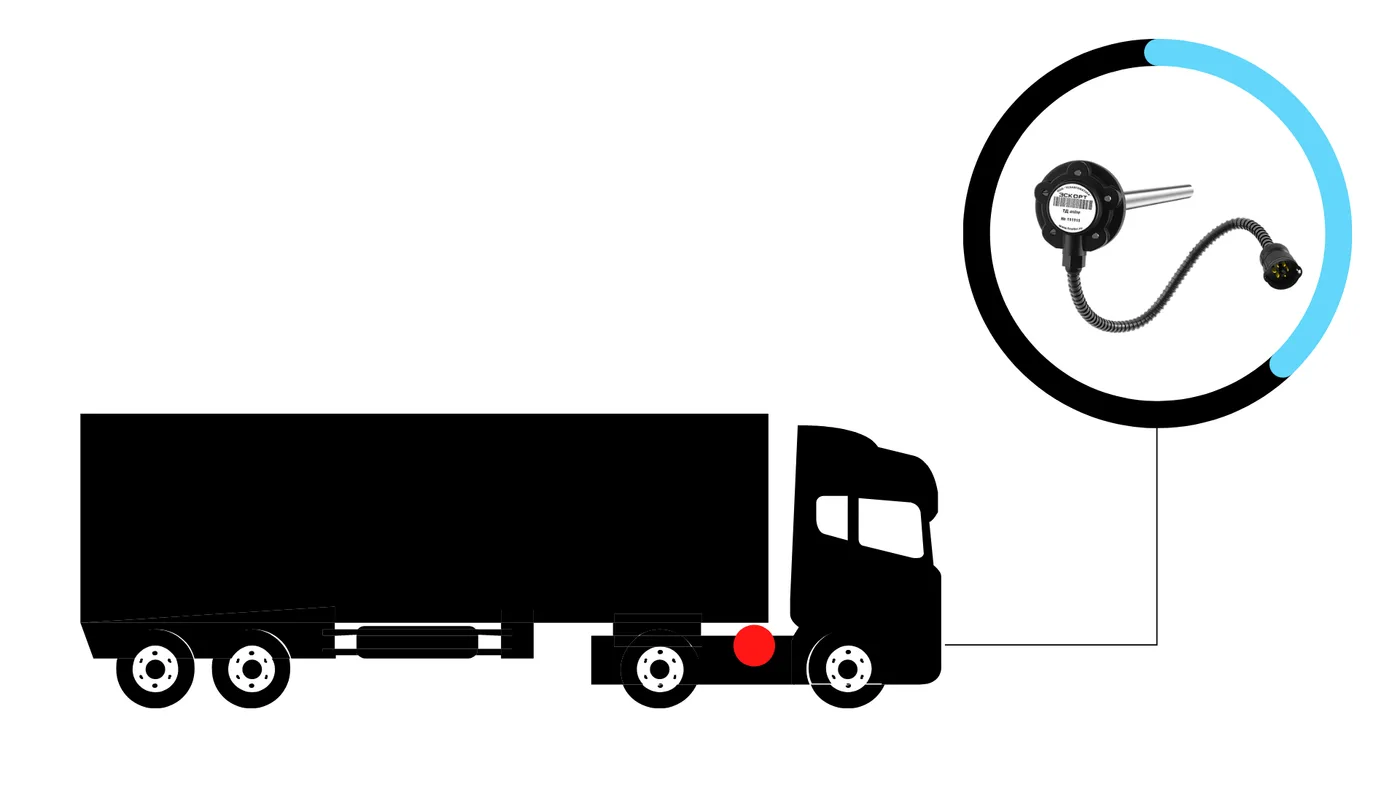
Fuel level sensor in a lorry or truck
A fuel flow meter measures how much fuel passes through the fuel line and shows consumption in real time. It is fitted into the fuel supply system, so the job needs care with pressure, return flow and air in the system.
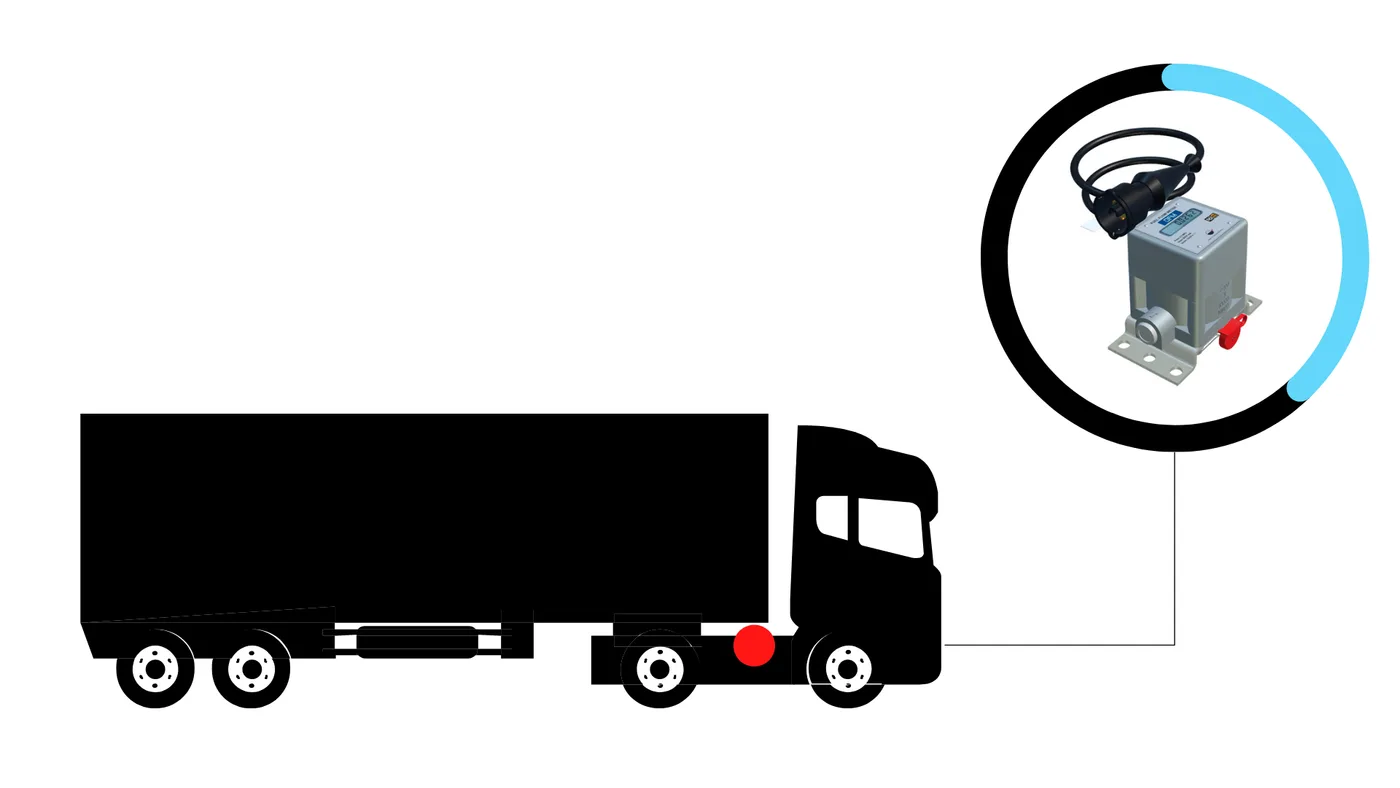
Fuel flow meter in a lorry or truck
Fitting a sensor is a workshop job; making sense of its data is a tech job. Any good service centre can handle the fitting; the software does the rest.
Option C: fuel by maths, with no sensor
Every vehicle has a rated consumption, but it only holds in ideal conditions. Speed, acceleration, engine revs and load all change it. FiOS uses a maths module that combines the rated consumption with GPS data on speed, acceleration and road conditions to estimate the fuel each trip really used. It is a good starting point when sensors are not worth the cost.
What the software shows
Whichever source you use, the fleet software turns raw readings into answers:
- Current fuel level and changes over any period
- Consumption and how it depends on speed, revs and load
- Refuels, sudden drops that point to theft, and mismatches with fuel card transactions
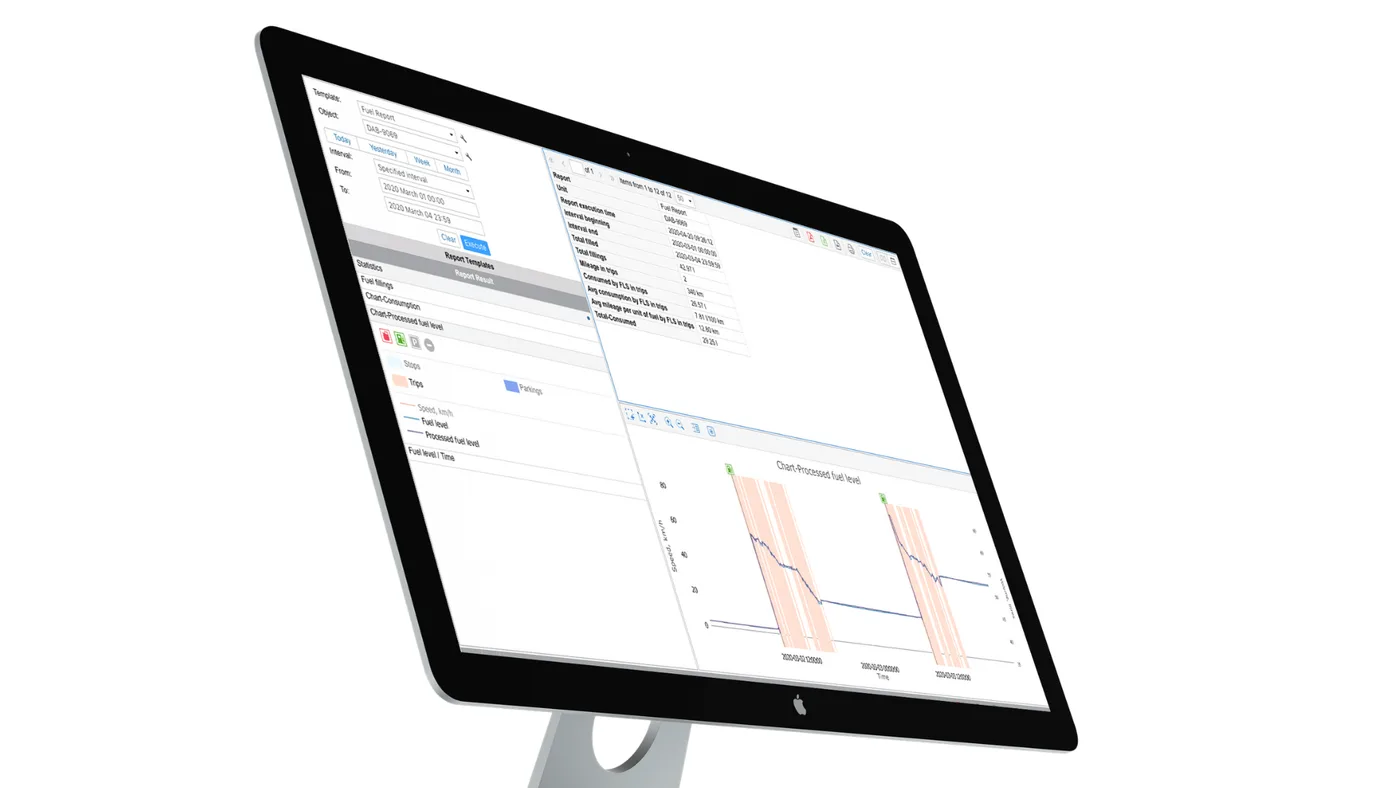
Fuel reports: tables, charts and graphs
2. Maintenance management
You do not need special hardware for maintenance. The tracker already reports mileage, engine hours and location. Enter each truck's service plan once (for example, an oil change every 10,000 km), and the system compares it with the real mileage and warns you before the service is due.
A truck at 200,000 km with an oil change due at 210,000 km triggers a reminder as it gets close, not after it is late. You also see how many trucks are off the road for repair, so you can plan work with the vehicles you actually have. Developers keep moving this towards predictive maintenance: finding a problem before it becomes a breakdown.
3. Tyre pressure
Tyres are the third largest fleet expense, about 10% of variable cost. Tyre pressure sensors fit on the valve of truck and trailer tyres and send pressure readings to the tracking system. When a tyre runs low, the dispatcher can ask the driver to inflate it straight away. Correct pressure saves fuel and greatly reduces tyre wear.
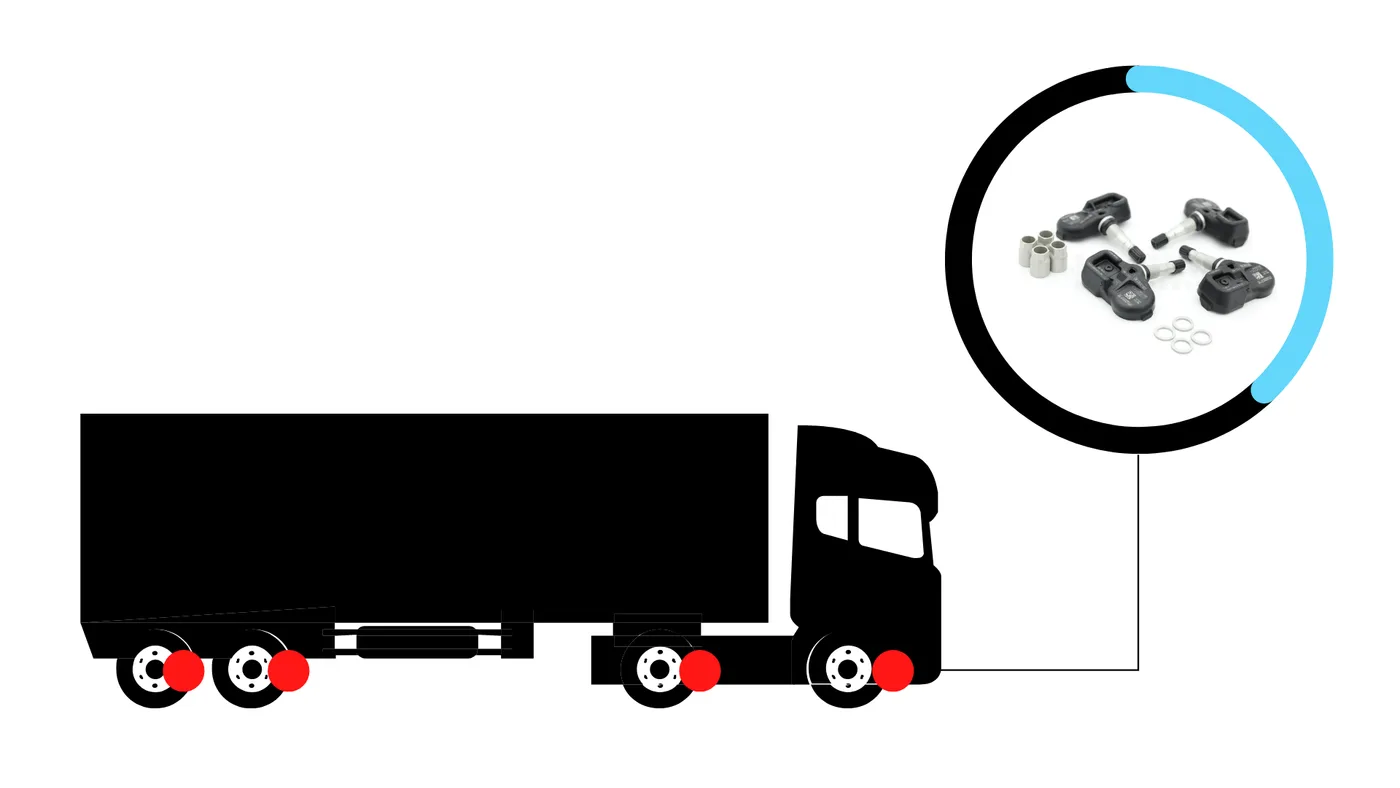
Tyre pressure sensors on trucks and trailers
4. Engine immobiliser
A truck and its cargo can be worth a fortune. The system alerts you if a truck moves, leaves its route or starts its engine out of hours. If the driver knows nothing about it, you can stop the engine remotely and share the exact location with the police.
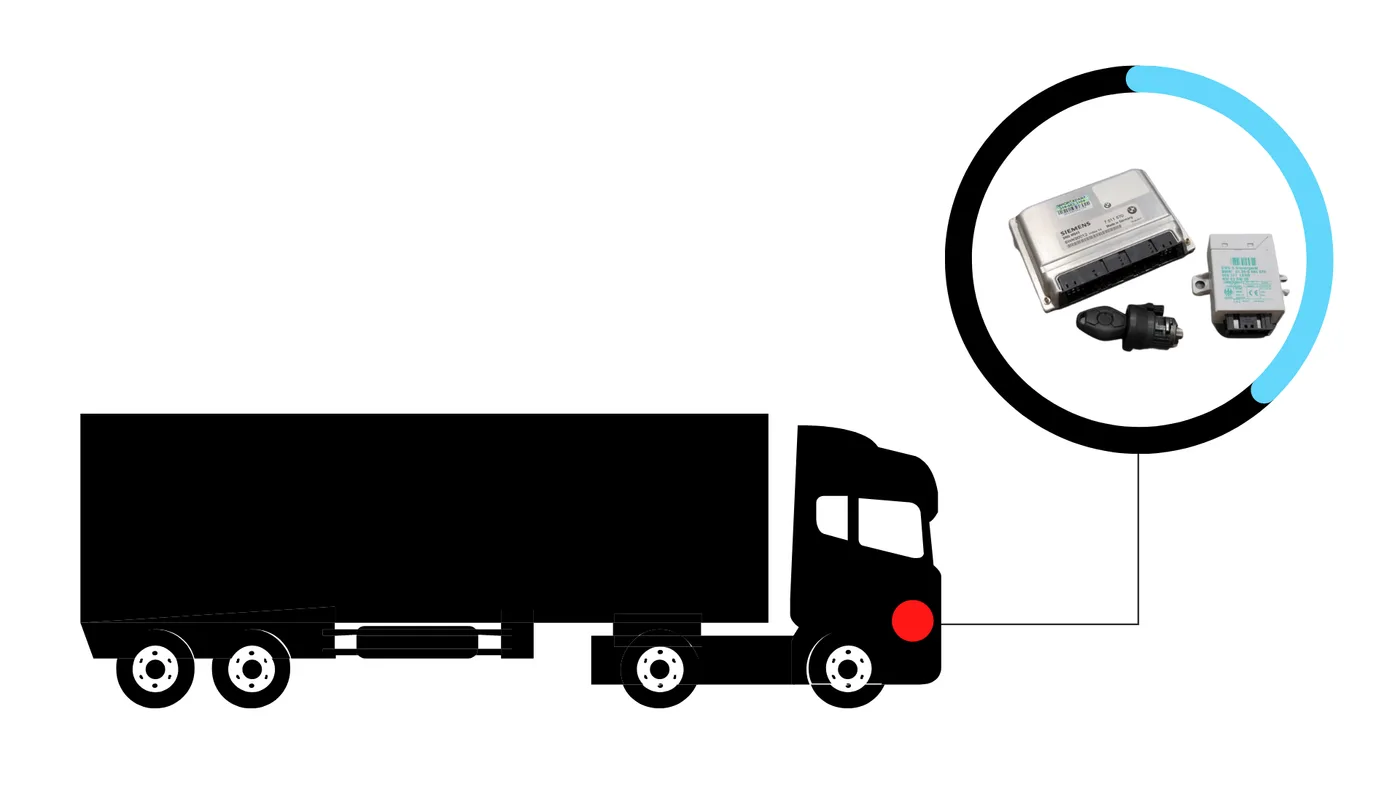
Remote engine immobiliser
5. Door sensors
Door sensors on the cab and the trailer tell you when a door opens, and where. That stops unauthorised access before the truck moves and protects cargo on the road. For chilled goods, an open door also means the temperature is at risk: the sooner the driver checks it, the better the chance of delivering the goods unspoiled.
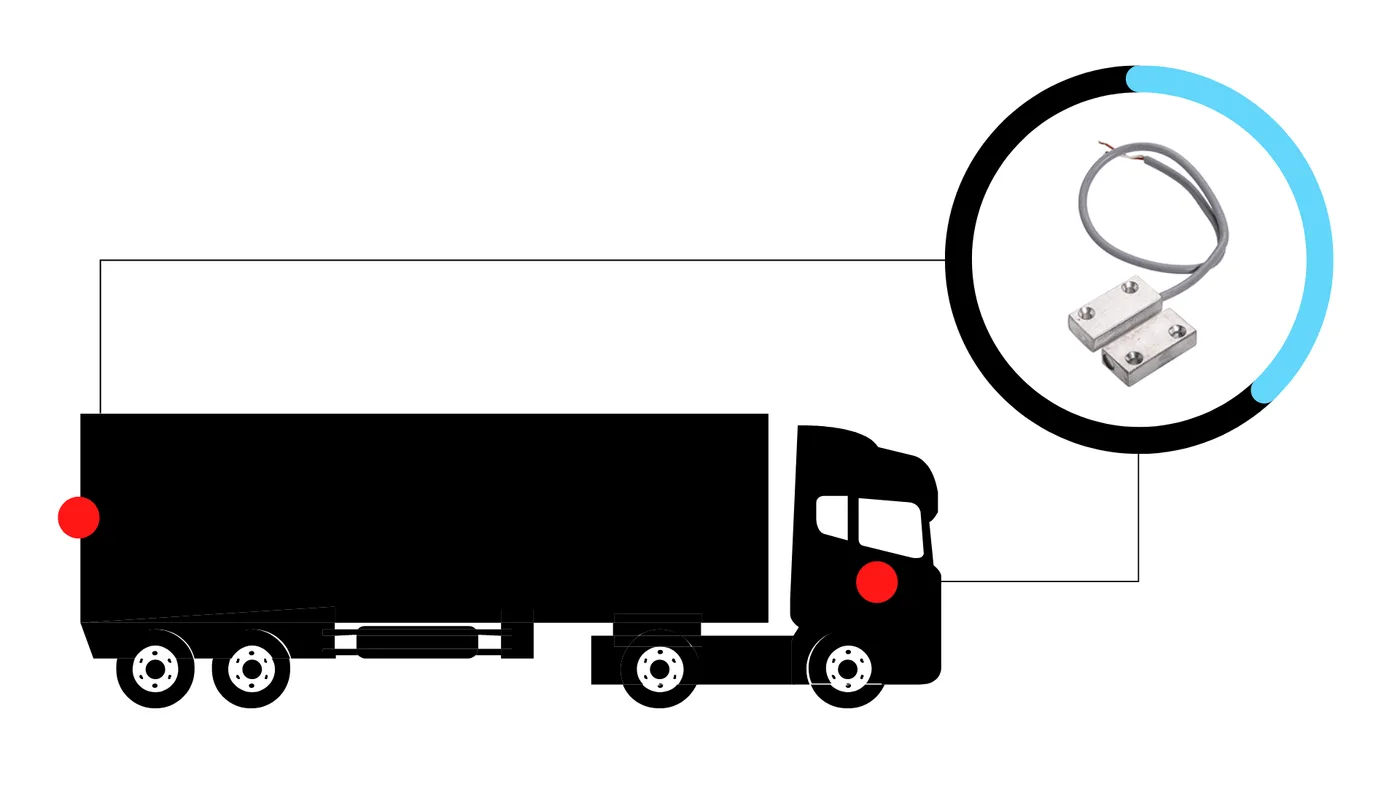
Door sensors on trucks and trailers
6. Driver behaviour
The same research names speed as the most important factor in fuel and maintenance costs. Every harsh acceleration, hard brake and sharp turn adds to the bill. Modern trackers and CAN-ready trucks send motion data that the software turns into clear driving events: speeding, harsh braking, harsh acceleration, sharp cornering and your own custom rules.
Use it to prevent accidents in real time, give drivers personal coaching, or build fair bonus schemes around driving quality. Extensive driver behaviour monitoring is available on FiOS today and is coming to TRAZET by the end of 2026.
7. Video telematics
A road-facing and driver-facing camera lets dispatchers see the road, not just data, and gives clear evidence after an incident. Event cameras record only around an incident (a few seconds before and after), which saves mobile data and spares the dispatcher from watching a screen all day. ADAS and driver monitoring cameras go further and warn about distraction, phone use or smoking at the wheel. KLOUDIP's SKIEYE video platform brings these streams into the same view as your tracking.
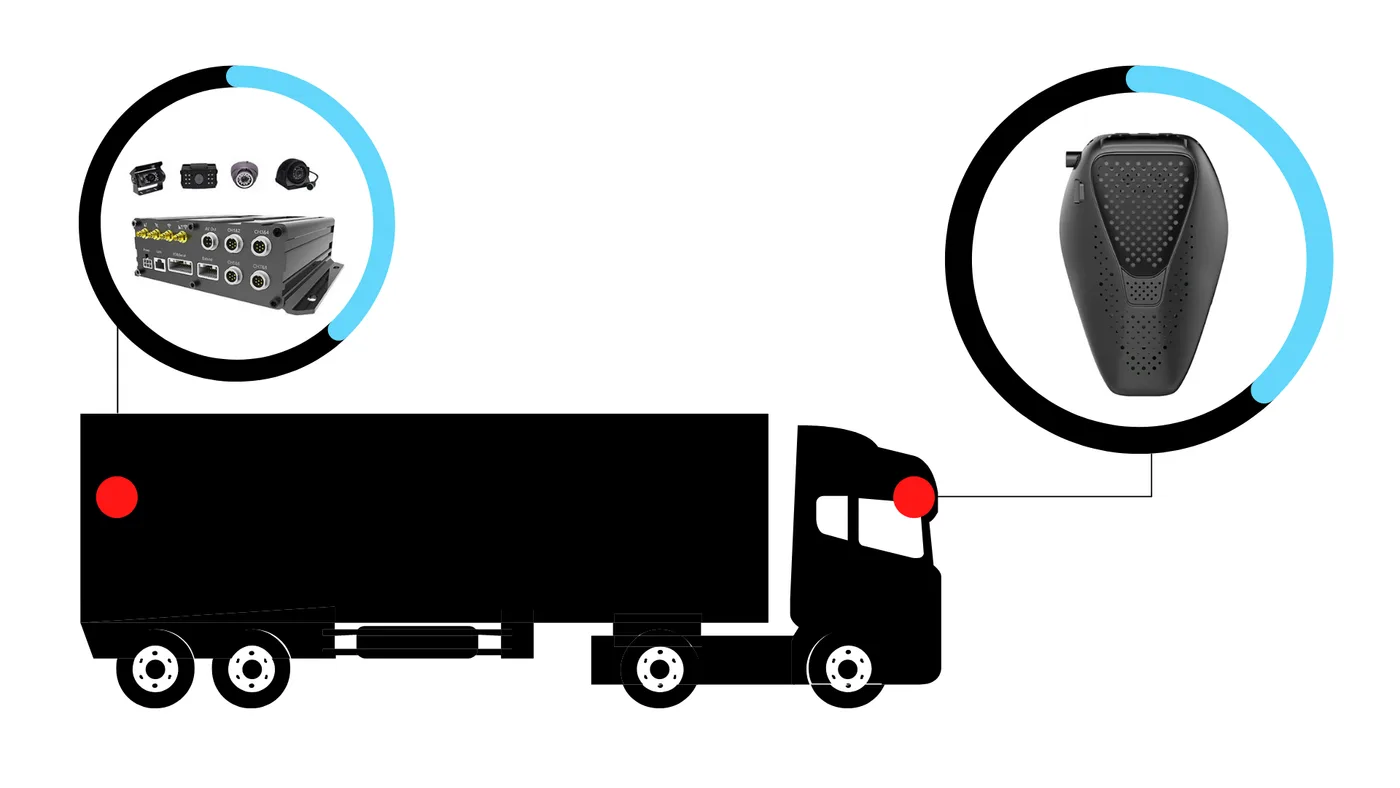
Video telematics for trucks and lorries
8. Temperature and humidity
For pharmaceuticals, ice cream and other chilled goods, wireless temperature and humidity sensors sit inside the trailer or in each cool box. They connect to the tracker over Bluetooth, with no wiring.
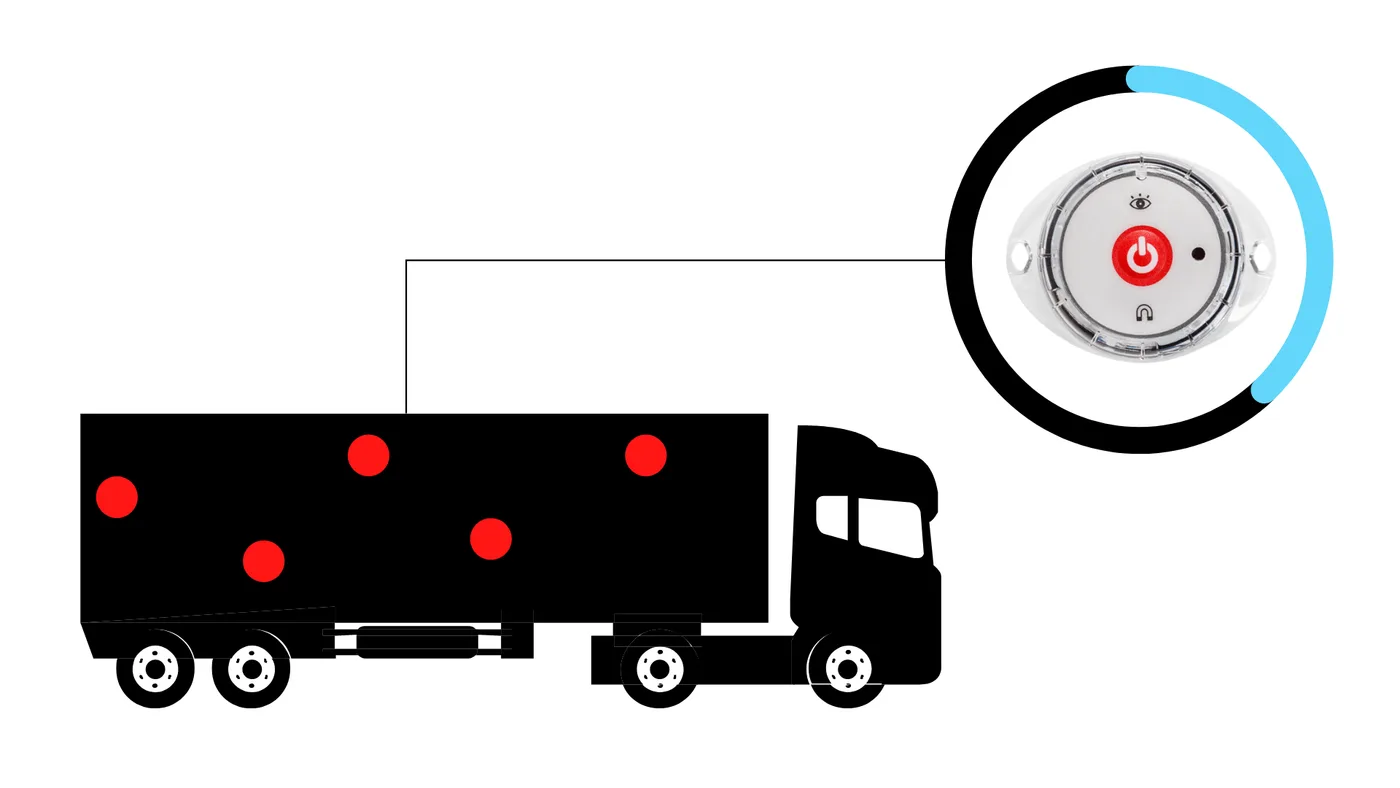
Wireless temperature and humidity sensors
The readings go to HAZER, KLOUDIP's sensor monitoring platform:
- Every sensor appears as a widget or scale on one dashboard.
- Widgets change colour when a temperature limit is broken.
- Alerts reach the dispatcher, so nobody has to watch the screen.
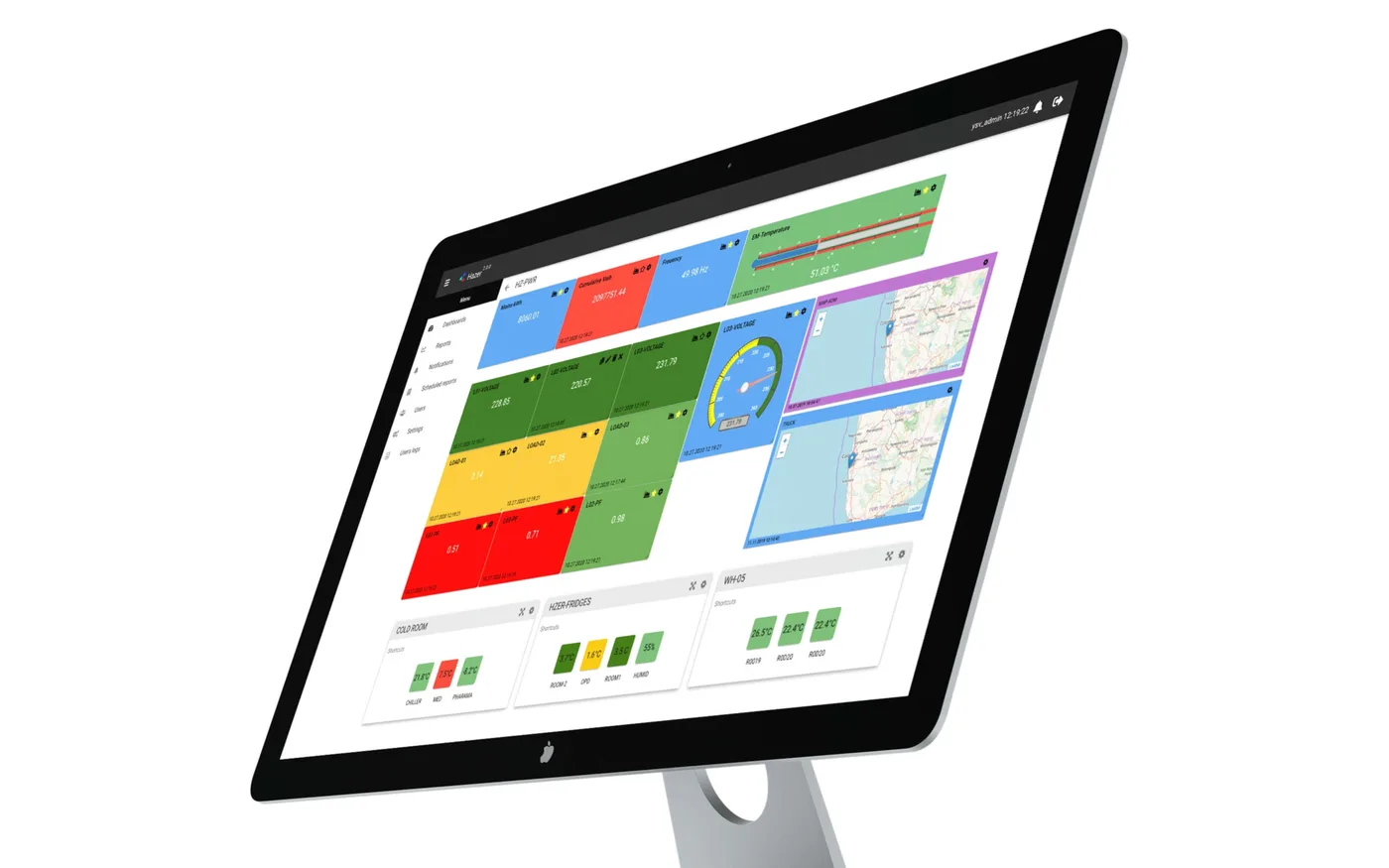
HAZER sensor dashboard
HAZER is also on iOS and Android, so you can check every truck's temperature from anywhere.
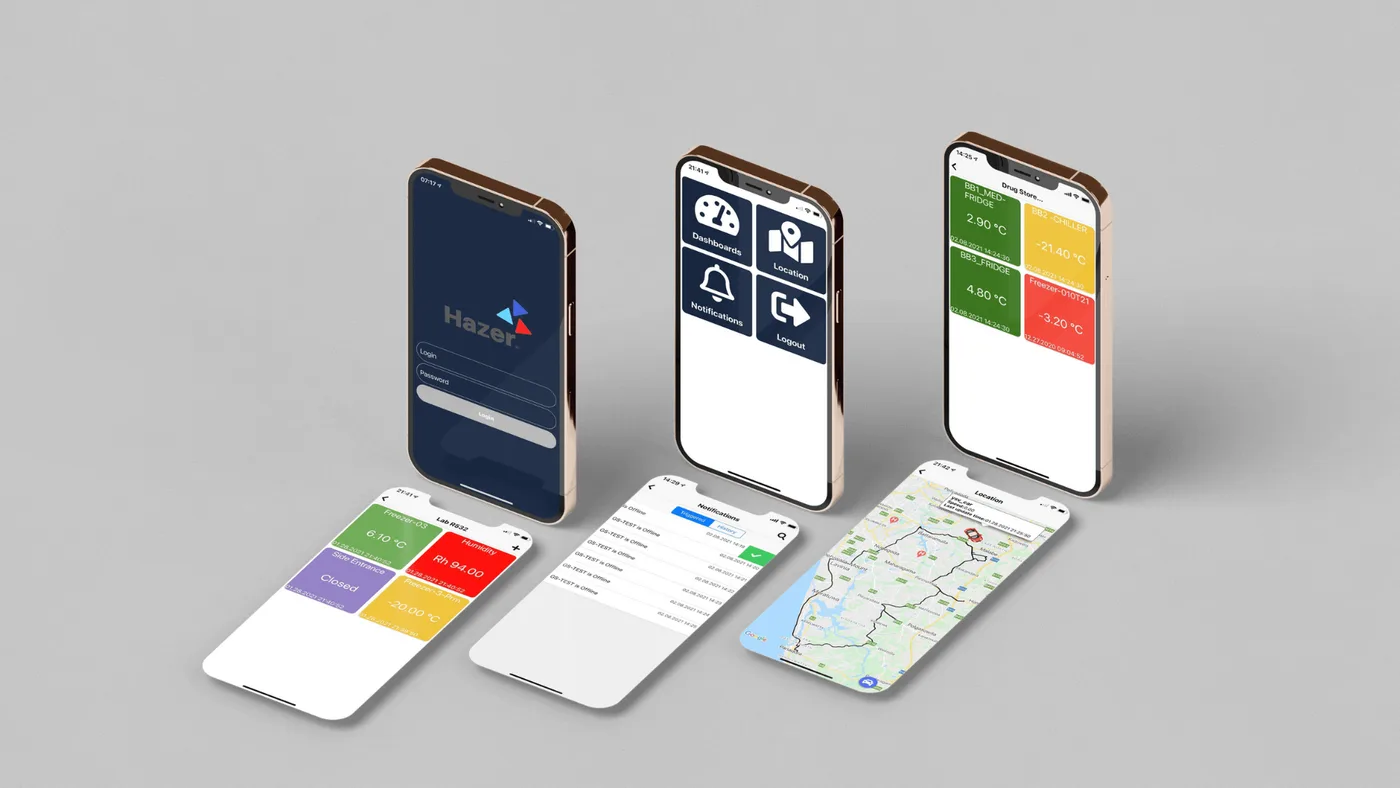
HAZER mobile app for iOS and Android
9. Axle load and weight
Overloading raises fuel use and wears the truck out faster. Axle load sensors read the air pressure in the suspension and the software converts it to kilograms. If the load drops between A and B, you can check where the truck stopped and find out where cargo went missing.
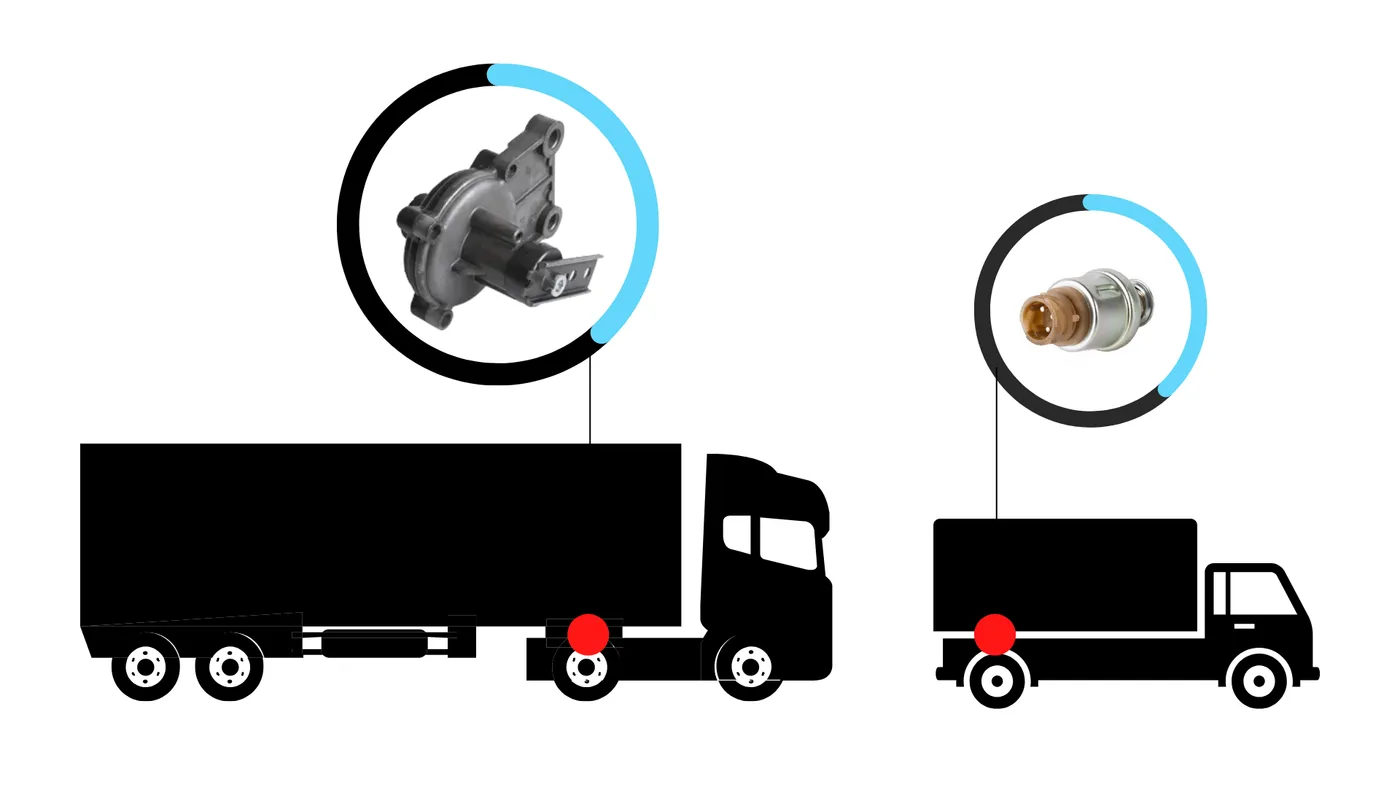
Axle load sensors on trucks and lorries
10. Delivery and distribution management
Distribution needs software, not hardware. EPORT, KLOUDIP's delivery platform, gives dispatchers a web system and drivers an app on iOS and Android.
- Orders: add orders in a few clicks or import them in one file, with weight, value, time window and address.
- Planning: assign orders to available trucks and plan the best routes from your warehouses.
- Live delivery: follow drivers on the map, get event alerts and reach drivers instantly.
- Proof of delivery: drivers confirm each drop with photos, notes and a digital signature, and customers can see when the truck is close.
The result: fewer kilometres, faster deliveries, more work with fewer trucks and less paperwork. Learn more about EPORT.
11. Driver hours and pay
Drivers and helpers may be paid a fixed wage, a share of each delivery, a per-kilometre incentive or overtime. Whatever the scheme, the tracking system can supply the numbers. Assign a driver to a truck by hand, or automatically when the driver taps an RFID card in the cab. From then on, trips, hours and kilometres belong to that driver, and FiOS can calculate pay from the actual work done.
12. Road restrictions
Mark narrow, rough or speed-restricted roads with a line geofence. If a truck enters one, the dispatcher is alerted and can ask the driver to return to the planned route.
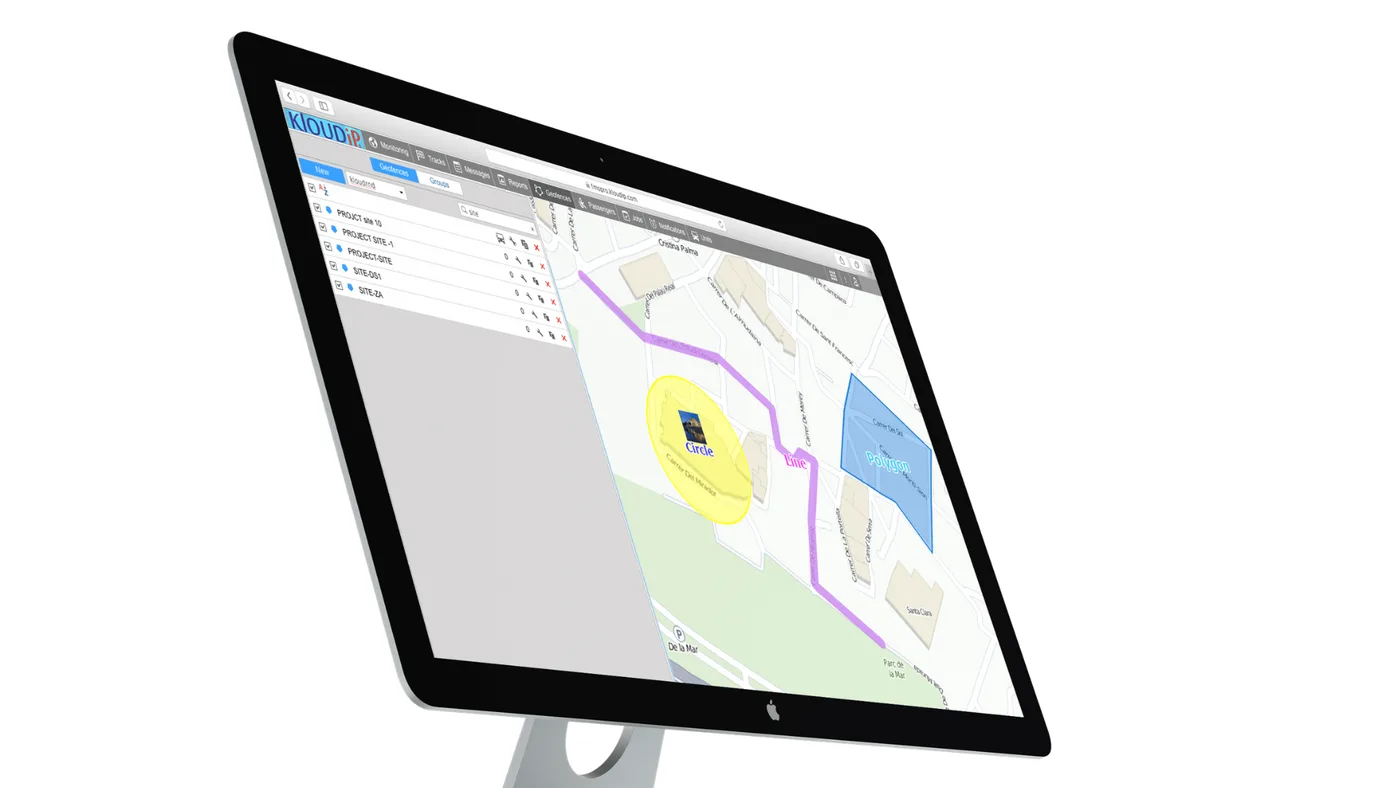
Line geofences mark roads to avoid
13. Support that scales with your fleet
A fleet runs day and night, so support has to as well. Every KLOUDIP support request gets a ticket and a reference number, and is handled by a team of skilled specialists. Iris, KLOUDIP's AI assistant, can open a ticket and give its status by phone, any time.
Frequently asked questions
Do I need a fuel sensor to monitor fuel in my trucks?
Not always. Many newer trucks report fuel data over CANBUS, and FiOS can also estimate fuel use from GPS data. A fuel sensor is best for older trucks or when you need the highest precision.
My trucks already have a tracker. Do I need new hardware?
Often not. In many cases the hardware is already in the vehicle; KLOUDIP builds the intelligence that turns its data into answers. Send us your truck models and current devices and we will check.
Which option should I start with?
Start with fuel and driver behaviour: they affect the largest share of variable cost and usually pay back fastest. Add sensors later where the cargo or route needs them.
Talk to us
Tell us about your trucks and routes, and we will suggest the options that pay back first. Contact KLOUDIP
First published on KLOUD LIVE in December 2023. Updated and revised in November 2026.