
For businesses that run vehicles, fuel is usually the biggest fleet expense, often more than half of the operating budget. It is also the main source of a fleet's CO2 emissions. Cutting fuel use saves money and helps the environment at the same time. Here is where fuel goes, and how to keep more of it.
Key takeaways
- Heavy vehicles are where fuel savings matter most.
- Driving style, idling, route choice and maintenance are the biggest levers.
- Fuel theft and private use are hidden costs that only data reveals.
- Telematics measures all of it, with or without fuel sensors.
Heavy vehicles burn the most
A small car may use 4–6 litres per 100 km. A bus uses around 25, a lorry or 4WD around 24, and a heavy truck 35–40. Take a bus operator: a bus covering 1,000 km a day at 25 l/100 km burns 250 litres every day. Multiply that by a whole fleet and even a few per cent saved is a large sum.
Eight ways to improve fuel economy
1. Driving style
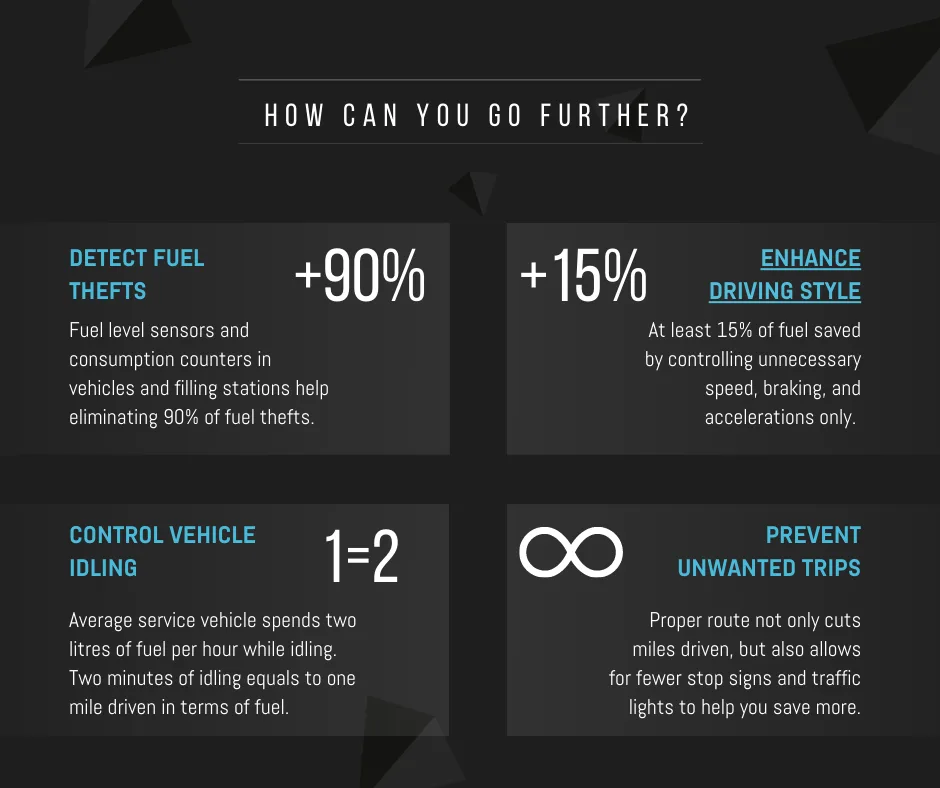
Careful drivers have fewer accidents, fewer fines and fewer fill-ups. Controlling unnecessary speed, braking and acceleration alone can save around 15% of fuel, and European transport researchers at ECTRI have found that an aggressive driver can use up to 40% more fuel than a calm one. Logistics experts also note that most trucks get their best mileage at around 55 mph (about 90 km/h), yet many drive faster.
2. Idling
Drivers often leave the engine running while parked or unloading, for the radio or the air conditioning. An idling service vehicle burns roughly 2 litres an hour, and industry reports put typical service-fleet idling at three to four hours a day. For trucks and machinery the figures are far higher.
3. Routes
Shorter routes save fuel on every trip. A few kilometres saved per route, multiplied by every vehicle and every day, adds up quickly.
4. Roads and speed
The shortest route is not always the most economical. Narrow, rough or congested roads mean constant braking and low gears. A good route lets the vehicle hold a steady, moderate speed: UK driving guides estimate that driving at 70 mph uses about 9% more fuel than at 60 mph, and 15% more than at 50 mph.
5. Maintenance
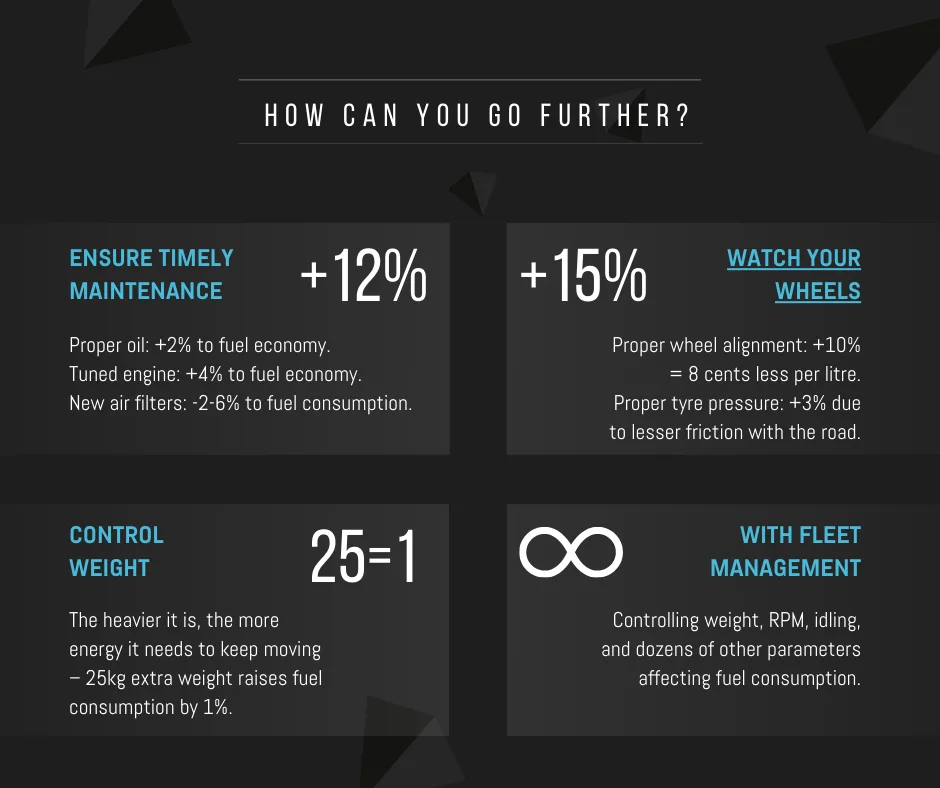
A healthy vehicle uses less fuel. The US Department of Energy notes that the correct engine oil alone can improve fuel economy by up to 2%. Other commonly cited gains:
- A well-tuned engine: around 4% better economy.
- Clean air filters: 2–6% lower consumption.
- Correct wheel alignment: less rolling resistance.
- Correct tyre pressure: around 3% better economy.
6. Weight
The heavier the vehicle, the more energy it needs. As a rule of thumb, every extra 25 kg adds about 1% to fuel use.
7. Theft and private use
Fuel theft usually happens during stops and at the end of the day, when nobody compares fuel purchases with real mileage. It can even happen with fuel cards. Using company vehicles for private trips is another quiet drain. Read more in the most common fuel card frauds.
8. How vehicles are used
Restarting an engine uses about as much fuel as 30 seconds of idling, so switch off for any stop longer than that. Air conditioning can raise fuel use by 10–20% according to the Government of Canada, and more in larger vehicles. Changing up a gear sooner keeps revs and fuel use down.
How telematics cuts fuel use
Fuel management is not one sensor or one report. It is a set of tools that covers all the drains above. FiOS, KLOUDIP's fleet management platform, brings them together.
Fuel monitoring
Fuel level sensors show consumption through changes in the tank; flow meters measure the fuel that passes through. Many newer vehicles report fuel directly over CANBUS, with no extra sensor. FiOS shows consumption live and in reports, including against speed, engine load or air conditioning use. Refuels and sudden drops stand out on the fuel graph, so theft is easy to spot.
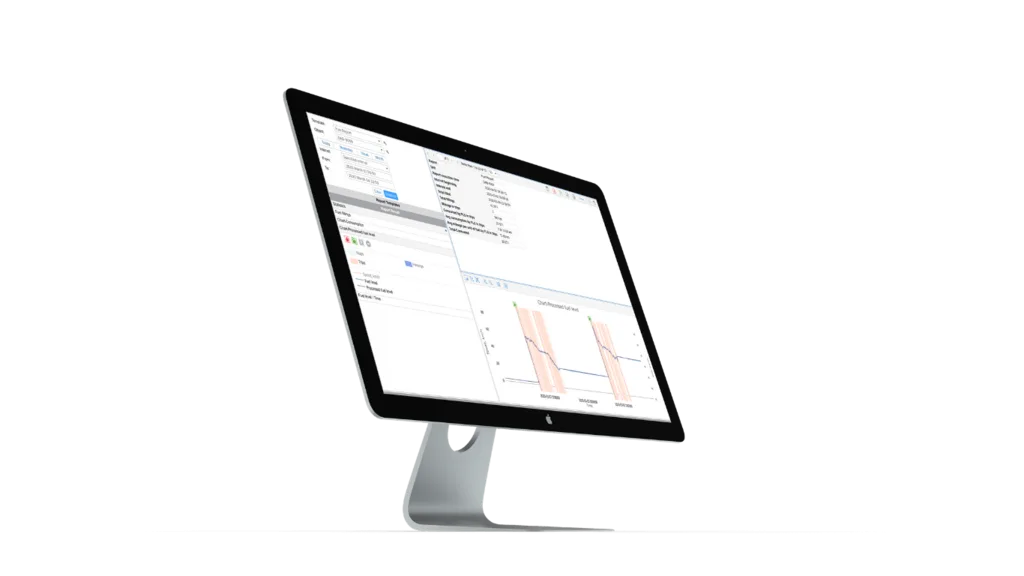
Fuel reports in FiOS
Fuel monitoring without sensors
FiOS can also calculate consumption without fuel hardware. Starting from the vehicle's rated consumption, it applies formulas for speed, revs and air conditioning to estimate the fuel used on every trip.
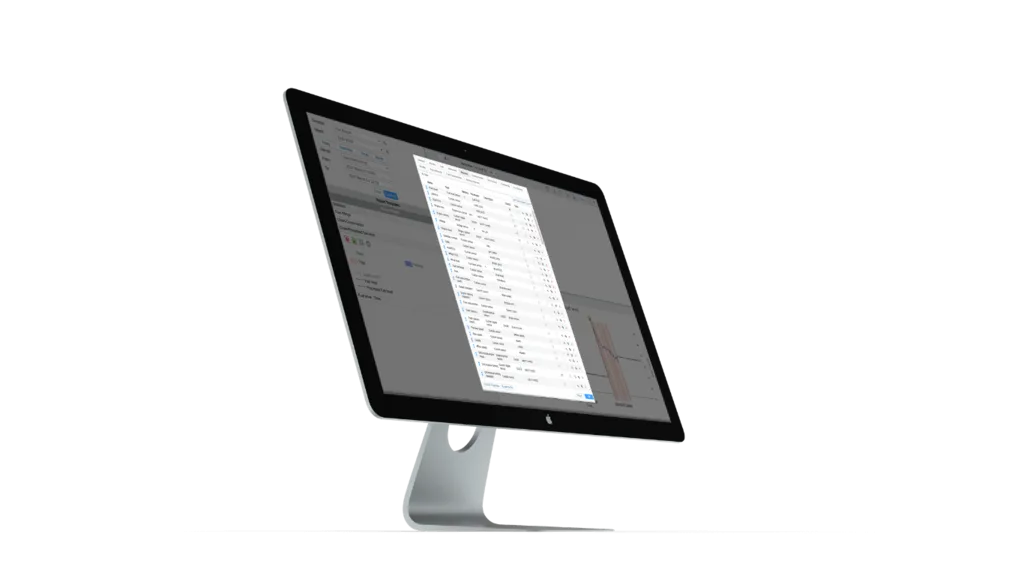
Sensorless fuel calculation
Driver behaviour
FiOS detects speeding, harsh acceleration, harsh braking and sharp turns and ranks every driver, so training and rewards target the right people. Brandix used this approach to cut accidents sharply and save fuel. See driver behaviour monitoring.
Idling
FiOS shows which vehicles idled, for how long and where, plus engine starts and air conditioning use, which is usually enough to judge whether idling was reasonable.
Maintenance
Service reminders based on real mileage and engine hours keep oil, filters, tyres and engines in the condition that saves fuel.
Routes and roads
Route planning in EPORT cuts kilometres for delivery fleets. In FiOS, line geofences mark roads to avoid, or preferred roads with speed and rev limits, with an alert when a vehicle strays.
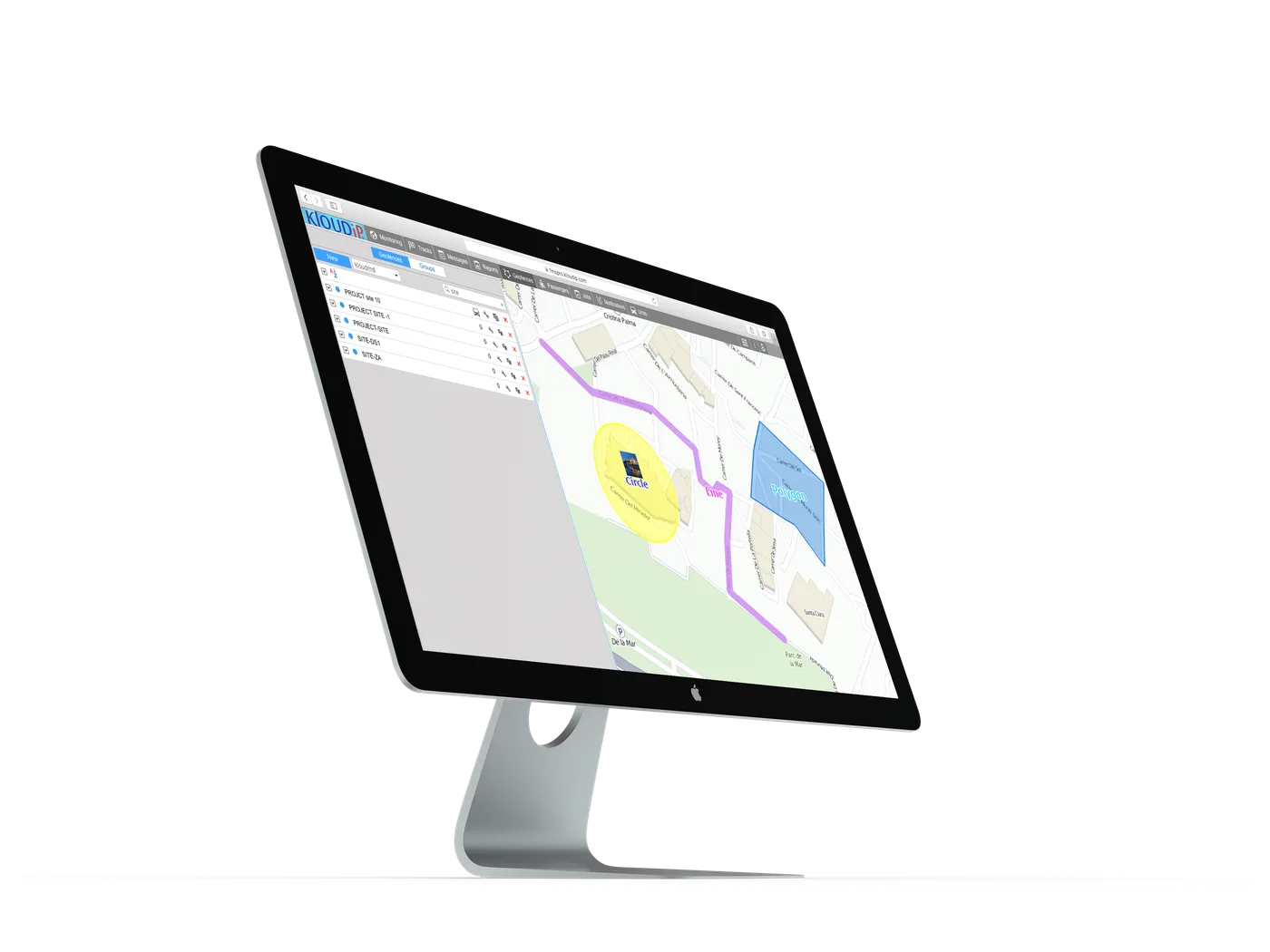
Line geofences mark roads to use or avoid
Weight, private trips and the nearest vehicle
Axle load sensors flag overloading and feed fuel calculations. Work hours set in FiOS separate private trips after hours, with their fuel and distance. And sending the vehicle nearest to the job, instead of any available one, saves kilometres every time.
Frequently asked questions
How do I start monitoring fuel in my vehicles?
Check whether your vehicles report fuel over CANBUS. If not, choose between fuel level sensors and sensorless calculation in FiOS. Then set up reports and alerts and train the team to act on them.
What affects fuel consumption the most?
Driving style, idling, route and road choice, vehicle weight and maintenance, plus theft and private use where they are not controlled.
How do I work out the return on a fuel monitoring system?
Add up the cost of hardware, software, installation and training. Estimate annual savings from lower consumption, shorter routes, better driving and less theft. Divide cost by monthly savings to get the payback period, then add the extra benefits: lower maintenance, longer vehicle life and lower emissions.
Talk to us
Want to know where your fleet's fuel really goes? Ask us for a fuel review. Contact KLOUDIP
First published on KLOUD LIVE in March 2021. Updated and revised in November 2026.